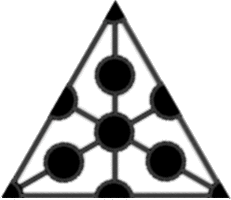
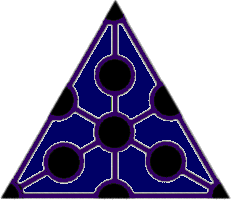
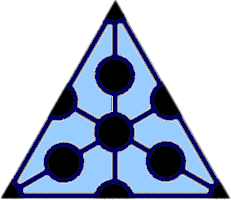
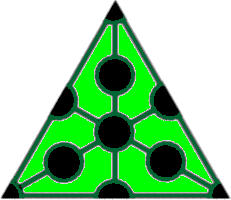
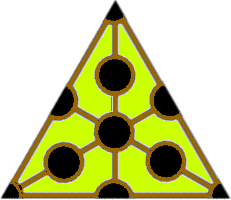
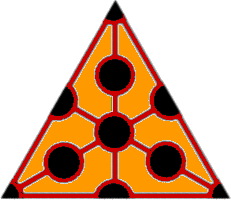
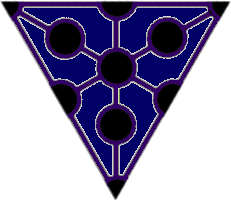
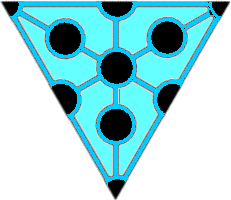
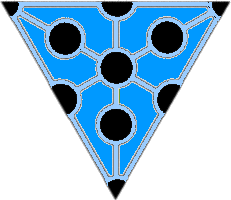
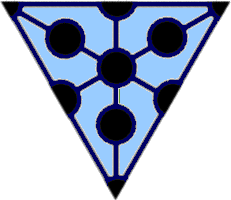
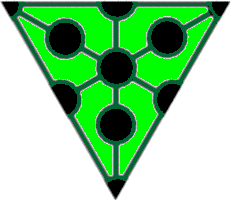
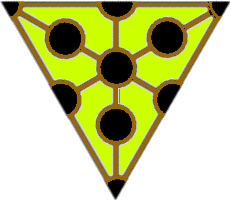
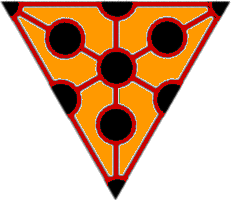
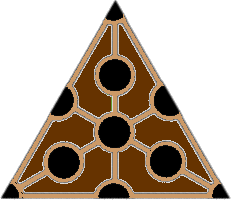
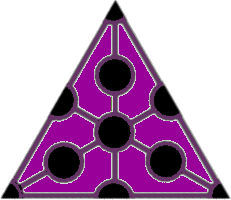
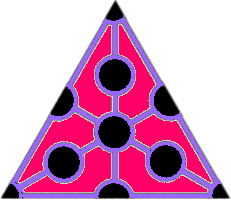
The game's history: From the 1980's hand drawn to these computer images in 2002.
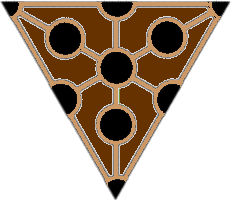
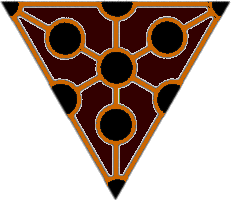
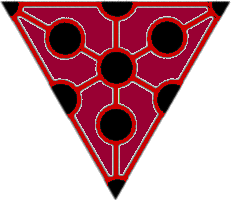
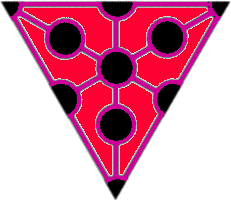
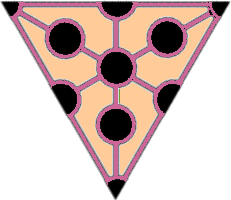

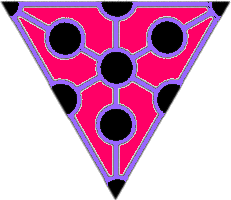

222 (16) different colored tiles, representing different types of terrain.
And then doubled in number by creating a mirrored set oriented in the opposite direction.
Players would begin the game by selecting (drawing?) the tiles and placing them
One per player per turn, until all the tiles had been placed on the board (table.)
Rule #1.) They must be placed edge to edge with others on the board.
As you can see, these would connect up in a variety of ways.
The circles on the tiles represent places where players could place tokens. And that would be the next part of the game:
Each player in turn placing their tokens or markers on the board, claiming these places.
 MORE:
MORE:
As the game has progressed to becoming a computer game, it's very nature has been altered.
Much of this is strangely due to accidents in coding, then deciding that the outcome was most desireable. I have considerable help from Chat GPT, and have had to take a baby steps aproach while simultaneously keeping the big picture in mind.
The game has gone from being about real terrain with a combative concept to one that is now more abstract and almost competivly constructive in its nature.
It is now a stadegy game, a bit like GO in it's nature yet, different. I settled on having 12 players at the maximum due to needing to distinguish player colors. And unlike many other games, no one is elimated during play. ...I like this, as it always seemed harsh that some would have to sit out waiting for the others to finish a game.
Time will tell if this becomes fun and challenging for folks or not.
 -PLAY
Sound editor
Legacy prototype (2002) - modern Canvas versions (2026)
-PLAY
Sound editor
Legacy prototype (2002) - modern Canvas versions (2026)